Thursday, October 4, 2012

Ireland "caught up in a race to the bottom" - Mythen

Cllr Johnny Mythen has said that the decision to pay an unsecured bondholder €1 billion last week while emigration is at its highest level since records began highlights the fact that we are all caught in a race to the bottom. 

Cllr Mythen said;

"The tragic continuing payments to unsecured senior bondholders is simply draining.  It is draining away our jobs as unemployment continues to stand at 14.7%. It is draining away our young people as we saw 240 emigrating per day last year.  It is draining our domestic economy as hundreds of small businesses are going to the wall for want of a little capital."

"This week the banks Have taken one billion euro from Irish citizens to hand over to their private clients, and to add more salt to the wounds, they have increased interest rates in an already faltering and shrinking economy.  This is surely an unsustainable and delusional position for any government to follow."

"Our small Island nation, if it is to survive, must challenge the austerity policies of our own domestic government and those of the I.M.F.  The figures are not adding up.  We all are caught up in a race to the bottom fuelled extensively by the lack of regulation on these financial institutions and the unwillingness of the Irish government to challenge their counter parts in Europe for a fair deal for Ireland."

Wednesday, October 3, 2012

Sinn Féin condemn payment of 1 billion euro to bondholders as "national treachery"


Speaking after a unsecured AIB Bondholder was paid €1 billion on Monday, North Wexford Sinn Féin spokesperson Fionntán Ó Súilleabháin said:

"Yesterday (Monday) the Fine Gael/Labour Government allowed another €1 BILLION of our money to be paid to unsecured bondholders - wealthy individuals and institutions who gambled and lost - thus penalising the Irish people and attacking our health and education and social welfare and housing and local government services. they have impoverished this nation and condemned this and future generations to mass unemployment and emigration. And in the face of this scandal what had Enda Kenny got to say for himself? He plays the old threadbare card "Gerry Adams was in the IRA" -a pathetic distraction. As if this would trump the national treachery for which Kenny and his cohorts are responsible. Its long past time that his party's local representatives raised their voices against this national treachery"

Thursday, September 27, 2012

Family farms must be protected – O’ Súilleabháin


Keeping as many families on the land as possible should be a government priority according to a local spokesperson for Sinn Féin. Speaking at the National Ploughing Championships in New Ross last week, Fionntán O’ Súilleabháin said that Irish farming was responsible for up to 300,000 jobs, €9 billion of exports and €8 billion being spent back into our own economy by farming families. Mr O’ Súilleabháin also said that he fully supported the IFAs Day of Action on October 9th.

Mr O’ Súilleabháin said;

“Successive Irish governments have neglected the agriculture sector and rural communities. In 2009 our agriculture output was less than it had been two decades earlier which resulted in farm income falling by 30%. Irish agriculture has been in decline for many years because of this neglect. Nationally the number of farms has fallen from 228,000 in 1975 to 128,000 in 2006. It is projected that this decline will continue, reaching 105,000 in 2015, as more small farmers are forced off the land.”

“The government must make keeping as many families on the land as possible a priority. In other countries we have seen family farms taken over by corporations and large agri businesses. Not only has this led to a drop off in productivity on these farms, it has also led to a reduced local economy. In rural areas the local economy is far more dependent on small farms than our government may realise. Every year farming families spend €8 billion in this state and for every €100 of agriculture output there is a further €73 of output to the wider economy.”

“On October 9th the IFA will be holding a Day of Action to highlight the real need for Irish farming to be defended at home and abroad. Farmers must be assured fair prices at home from retailers and factories. The reform of the Common Agriculture Policy is vitally important for Irish farming. Unless our government makes a stand for our agri sector in the EU, the impressive growth targets laid out in documents like Food Harvest 2020 will be unachievable. I fully support the IFAs Day of Action.”

Kelly: Rural Regeneration is a Sinn Féin Priority


Speaking at the today’s National Ploughing Championships in New Ross, Cllr Anthony Kelly has said that rural regeneration is a Sinn Féin priority. Cllr Kelly was part of a delegation, which included Martin McGuinness and the six county Minister for Agriculture Michelle O’ Neill, that met with leaders of the IFA at the annual farming event.
Cllr Kelly said;

“The regeneration of decimated rural communities must be an absolute priority at this time. All around the state today there are villages and communities that are literally dying from the effects of prolonged austerity. Long term unemployment and debt has been amplified by the disappearance of so many young people who have been forced to emigrate in search of work. Public services have been slashed but struggling families find new taxes coming at them every budget.”

“We have seen schools and garda stations close in rural Wexford this year. The effects of these closures are already apparent as crime rates soar. I know of cases where old age pensioners are staying awake at night and sleeping during the day because they fear somebody will break in to their homes.”

“The regeneration of rural communities could stem these problems and stabilise the local economy. Sinn Féin believes that sustainable rural economies that can offer employment to young people can be built. We believe that the implementation of the correct measures now could stop the brain drain from these communities being caused by emigration and could act as the catalyst for real local economic growth in communities across the state.”

“The EU LEADER fund should be used to help develop much needed facilities for rural communities, facilities that are absence in many of our rural areas in County Wexford. Leisure, cultural, recreational and arts facilities could be developed in these areas. The maintenance and development of public utilities such as roads and street lighting could also be funded.”

Wednesday, September 26, 2012

Saturday Elections should now be the norm - O’ Súilleabháin


Fionntán O’ Súilleabháin has welcomed the government’s decision to hold the Children’s Referendum on a Saturday. The Sinn Féin spokesperson for North Wexford said that his party had been campaigning for all elections to be held on Saturdays for many years now. Mr O’ Súilleabháin said that Sinn Féin would be calling on the government to give a commitment that all future elections would be held on Saturdays to accommodate students and the many people who now work away from home during the week.

Mr O’ Súilleabháin said;

“Sinn Féin welcomes the government’s decision to hold the Children’s Referendum on a Saturday. It’s a decision that makes perfect sense. The only wonder is why this will only be the second referendum in the state’s history to be held on a Saturday.”

“Sinn Féin has campaigned for all elections to be held on Saturdays for many years now. It would certainly benefit those people who are away from home on election days, such as students and people who work away from home. In the current climate many people are working in the UK during the week. Surely holding elections on a Saturday could benefit all these people.”

“It almost makes you wonder why a government wouldn’t want to hold an election on a Saturday. Maybe some of our TDs wouldn’t be comfortable with the addition of college student’s votes?”

“Sinn Féin will be calling on the government to give a real commitment that all future elections will be held on Saturdays to accommodate the many people who find it impossible to vote on a weekday due to the obligations of college or work.”

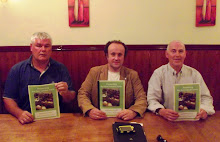
Sugar Beet Wexford 2015 - The resurrection of the Irish Sugar Beet Industry


Foreword - Agriculture in crisis

Successive Irish governments have neglected the agriculture sector and rural communities for many years now. This is most evident in the fall off in production in the agri food industry. In 2009 our output in that sector was less than it had been two decades earlier which resulted in farm income falling by 30%. Today rural communities are being subjected to the same mismanagement under Fine Gael and Labour as they endured under Fianna Fail and the Greens.

Irish agriculture has been in decline for many years. This has been a global trend. Nationally the number of farms has fallen from 228,000 in 1975 to 128,000 in 2006. It is projected that this decline will continue, reaching 105,000 in 2015, as more small farmers are forced off the land.

The most recent census of agriculture taken in 2010 found that there were 4,424 farms in County Wexford. The average size of a farm in the county is 41.2 hectares.

Despite the assessment that farming is once again very profitable, the reality is very different for many farming families in County Wexford. The majority of small farms in this county are run on a part time basis, with the farmer often holding another 9-5 job. Unfortunately many of these jobs were in the now decimated construction industry.

Clearly Farming has been neglected despite the huge benefits which it provides for our economy. The IFA estimates that farmers and farm families spend €8 billion per year in our economy. It’s thought that 300,000 jobs are supported by the agriculture, food and related industries. For every €100 of agriculture output there is a further €73 of output to the wider economy. 71% of raw materials used by our agri and fishing industries are sourced in the domestic market.

A strong, sustainable agricultural sector will benefit every citizen in this state.

Decline of South East Sugar Beet Industry

County Wexford agriculture was dealt a terrible blow in 2005 when the sugar processing plant in Carlow was closed. Around 700 farmers in County Wexford were engaged in this industry. The factory was closed despite the fact that Greencore was making annual profits in excess of €20 million. Sugar is still a very profitable industry and no attempts to rectify the mistake of closing the industry in the south east has been made by either the present or the last government.

A report by the European Court of Auditors in 2010 found that the closure of the last two sugar plants in Ireland, the Greencore plants at Mallow and Carlow, were needless because both businesses were profitable at the time.

One of the causes for the eradication of the Irish Sugar Beet Industry was the EU’s decision to radically reform the quota system for sugar protection across the Union. Greencore, which incredibly had been allowed to own the entire Irish sugar quota, decided it was a good time to get out.

2015 - The resurrection of the Sugar Beet Industry

Greencore was allowed to sell out Irelands sugar beet quota, leading to the end of a clearly profitable, vitally important agri business. We no longer legally have the ability to produce sugar beet in this state. This is not permanent however and a window of opportunity exists to allow Ireland back into the sugar trade.

The present quota regime runs until the 30th September 2015, though attempts are being made by vested interests to move this deadline to 2020. If the deadline is not tampered with, 2015 will be the perfect time for our sugar beet industry to be ready for full production.

A 2011 feasibility study completed by the Irish Sugar Beet Bio-Refinery Group recommended that the industry should be revived in its traditional growth region of the south east through the construction of a new integrated bio-refinery plant for the production of sugar and ethanol from sugar beet and grain.

The think tank stated that such a factory would cost €350 million, would create five thousand jobs and be profitable within the first year. In order to be so lucrative, sugar beet prices need to be above €570 a tonne. When you take that sugar beet prices currently stand at €850 per tonne for imported sugar, the revival of our domestic sugar beet industry makes total economic sense.

Wexford farmers were allowed to lose their livelihoods so the factory could be sold in a misguided attempt at property development. In addition to sugar beet being a profitable venture, growing it also enhances soil fertility and yields of other tillage crops. Sinn Féin believes that it is not too late to bring this industry back to the south east.

New Ross - The perfect site for a new plant

Following the closure of Irelands last sugar beet processing plant in 2006, former beet farmers came together all over the country to look at ways to resurrect their industry and look at a locations for new processing plants. One of the locations that was proposed at this time by the experts in the field, the farmers themselves, was New Ross.

Historically Wexford and Cork were the two dominant counties in the production of sugar beet. Wexford had the most farmers involved in the production of sugar beet in the south east, and its long tradition of beet farming and strong crop growing sector would evidently mean that it would have the most again should the industry be revived. This, coupled with the availability of the now empty Rosslare to Waterford Rail Line network and the standing logistical infrastructure already in place in Wellingtonbridge, makes this county the perfect location for a new bio-refinery plant.

The benefits would be mutual. Ireland would have back a profitable agri industry that should never have been allowed to go in the first place, while Wexford would see much of its unused rail network back in service and funding could become available for a number of key infrastructure projects that would benefit the entire population of the county. For example, there would be a new urgency for a second bridge in New Ross if a new processing plant was located there.

As well as the five thousand jobs that would be created directly through the opening of a new plant, many more jobs would be created through the development of new, and maintenance of existing, infrastructure utilised by the resurrected sugar beet industry.

Summary of our proposals

- The government must negotiate Irelands re-entry into the sugar market when the current EU quota system ends in 2015.

- A new bio-refinery plant for the production of sugar and ethanol from sugar beet and grain to be built in New Ross.

- Consideration should be given to the reopening of the unused rail lines in County Wexford for use in the transport of sugar beet into Ross. Most notably the recently closed Rosslare to Waterford Rail Line, which always played a prominent role in beet production in Wexford, should be reopened.

- The utilisation of re-education groups like FAS/SOLAS to train unemployed people for future careers in the sugar processing sector.

References

2010 Census of Agriculture
Food Harvest 2020
IFA Pre Budget Submission 2012
Awakening the West – Overcoming Social and Economic Equality
2011 feasibility study by the Irish Sugar Beet Bio-Refinery Group

Double Home Taxation will be opposed - Gaughan

A spokesperson for the Loch Garman against the Household tax group as said that the government's planned property tax is a blatant form of double taxation. Dominick Gaughan said that Minister Phil Hogan had recently admitted to retaining stamp duty after the introduction of the new property tax next year, something that the Loch Garman group feels is a very overt case of forcing householders to pay double tax on their properties.

Mr Gaughan said;

"The government's plan to retain stamp duty after the introduction of the new property tax is an absolute insult to the intelligence of the Irish people. Do they really expect people to warmly welcome, or even concede to such a blatant form of double taxation?"

"We have heard Fine Gael and Labour reps mutter consistently about the need for fairness. In relation to a family who have paid stamp duty now having a property tax imposed on them where is the fairness? How can this form of double taxation be fair on any low to middle income earning household?"

"And as we predicted when we were opposing and calling for the Household charge to be abolished we now see that ordinary low to middle income households and families will be paying 3, 4, 5 and 6 times as much money as they were asked to pay last time round. The Government told us we would have a fairer property tax. How could paying 3,4, 5 and 6 times more be conceived as fairer?"

"It is impossible for hundreds of thousands of Irish families to pay this unfair tax with all the cuts and extra tax's being imposed on their households. People made very cleared when they boycotted the household charge this year, not because they were troublemakers, but because they were bled dry from unrelenting austerity. The government has clearly ignored the people. Is that fair?"

"No one with an iota of sense could accept that imposing stamp duty and a property tax on a household and then claiming that it is not double taxation is fair. It is not fair and it will certainly be met with mass opposition. We have seen an enormous resistance against the household tax and we will see an even greater form of defiance to this property tax from the people of Loch Garman."

It's time to revive our sugar beet industry - Sinn Féin

A strong, sustainable agricultural sector will benefit every citizen on this island. 
That was the message from the Sinn Féin team at the National Ploughing Championships today.

The Sinn Féin finance spokesperson Pearse Doherty, along with local Sinn Féin rep Oisin O’Connell launched the party’s plan for the revival of the Irish Sugar Beet industry in New Ross today.
Mr O' Connell, the Chairperson of County Wexford Sinn Féin and a local tillage farmer, has called for the construction of new bio-refinery plant for the production of sugar and ethanol from sugar beet and grain in New Ross.
Mr O' Connell said;

“The collapse of the Irish sugar beet industry in 2006, brought about by the loss of our national quota and the closure of our processing plants, not only adversely affected tillage farmers and others directly involved in the sector, but also had a knock on effect right across Irish society. People sometimes forget that a successful industry like sugar can have huge benefits for all of society.

“The IFA estimates that farmers and farm families spend €8 billion per year in our economy. It’s thought that 300,000 jobs are supported by the agriculture, food and related industries. For every €100 of agriculture output there is a further €73 of output to the wider economy. It's very evident that a strong agri community can lift a stagnant economy like ours and help get people back to work."
Deputy Doherty pointed to the job creation benefits of revitalising the industry:

“What we need is investment in sustainable, lucrative industries like sugar beet processing. Sinn Féin is proposing the construction of a new bio-refinery plant for the production of sugar and ethanol from sugar beet and grain at a cost of €350 million. It will create 5,000 jobs and be profitable within the first year. Why? Because to be so gainful sugar beet prices need to be above €570 a tonne. When you take that sugar beet prices currently stand at €850 per tonne for imported sugar, the revival of our domestic sugar beet industry makes total economic sense."

“There are obviously those out there who may feel different. I know many beet farmers were stung hard when Greencore sold their industry away. In order to make this industry work they will need to be certain guarantees. No one company should ever again be allowed to control 100% of the Irish quota. Beet growers and those working directly in the industry must have access to fair profits. The industry will need to be safeguarded and never again sacrificed for the personal profits of select individuals."

“In the coming weeks and months Sinn Féin will be seeking to meet with interested parties whether they be ex beet farmers, rural community groups or agri contractors, to discuss how best we can resurrect the Irish sugar beet industry. In 2015 the current EU quota scheme changes and we will have a window of opportunity to revive our domestic sugar sector.”

Thursday, September 20, 2012

Revival of Irish Sugar Beet Industry in County Wexford would create 5000 jobs

Wexford Sinn Féin has proposed that County Wexford should be the base for the revival of the Irish Sugar Beet Industry in 2015.  Speaking ahead of next week's National Ploughing Championships in New Ross where the party will unveil its own local plans for the construction of a new Sugar Beet Processing Plant in Wexford, County Chairperson Oisin O’ Connell, himself a tillage farmer, said the conditions were now ripe for the revival of an industry which should never have been allowed to go.

Mr O’ Connell said;

County Wexford tillage farming was dealt a severe blow in 2005 when the sugar processing plant in Carlow was closed.  Around 700 of our county farmers were engaged in this industry.  The factory was closed despite the fact that Greencore was making annual profits in excess of €20 million.  In fact it was actually closed because Greencore, who incredibly had been allowed to maintain the entire sugar production quota for the nation, decided to opt out after learning of the EU’s decision to radically reform the quota system for sugar protection across the Union.”

“To say this was a mistake is an understatement.  Sugar beet continues to be a profitable crop, whether for the production of sugar or ethanol, and as any tillage farmer will tell you, it is a crop that benefits the ground it is grown in by actually enhancing the soil fertility and so increases the yield of the next crop to be grown there.”

A 2011 feasibility study completed by the Irish Sugar Beet Bio-Refinery Group recommended that the industry could and should be revived in its traditional growth region of the south east through the construction of a new integrated bio-refinery plant for the production of sugar and ethanol from sugar beet and grain.  It is my personal belief that there are several suitable locations in County Wexford for such a plant.”

“The construction of such a plant would cost an estimated €350 million.  It would create five thousand jobs, be profitable within the first year and would bring lucrative new income opportunities for struggling tillage farmers.  In order for the plant to be profitable sugar beet prices would need to be more than €570 per tonne.  Current prices stand at €850 per tonne for imported sugar, and no one believes that prices would fall below €570 anytime soon.”

“Sinn Féin believes the construction of a bio-refinery plant in County Wexford could bring huge economic benefits to County Wexford and the South East.  We will be unveiling part one of our document outlining the resurrection of the Irish Sugar Beet industry at the National Ploughing Championships.  I would invite those with an interest to visit our tent."

Labour shamed as they support household tax bully tactics

A spokesperson for North Wexford Sinn Féin and vigorous campaigner against the household tax has said that the Labour party's support for household tax bully tactics as revealed their true ethos and shamed their illustrious history.  Fionntán O’ Súilleabháin also urged Wexford County Council not to become complicit in the current attacks on those who had not paid what he terms 'the unfair household tax'.

Mr O’ Súilleabháin said;

"Minister Ruairi Quinn's very public support for the initial decision taken by Clare County Council to withhold college grants for children of household tax boycotters was sickening and a startling revelation of the true ethos of the current Labour party.  Mr Quinn was so busy cheerleading the crude bully tactics that he forgot to realise that it would be a clear breach of the rights of the applicant who must be independently assessed for a grant."

"Mr Quinn and his Labour party colleagues seem to also have forgotten the claim their party made to represent the interest of ordinary citizens before all else.  Clearly this claim is now void of any credibility."

"The Labour party has shamed itself and has obviously betrayed the mandate it was given by its voters at the last election.  They certainly did not vote for the intimidation of college students."

"Pressures are certainly being placed on county councils across the state to take radical measures in relation to the collection of the household charge.  Sinn Féin would urge Wexford County Council not to follow suit, not only because the household tax is a totally unjust charge that has been democratically rejected by the majority of the electorate, but because they took an oath to serve the people of Wexford."

It's beyond time that politicians like Minister Quinn, and those Clare County Councillors who sought to bully the parents of students into submission, remembered that they exist to serve the electorate, not the other way around."