Monday, October 25, 2010

Pearses oration for O' Donovan Rossa, 1915

Padraig Pearse speaking at the funeral of old fenian O' Donovan Rossa
It has seemed right, before we turn away from this place in which we have laid the mortal remains of O'Donovan Rossa, that one among us should, in the name of all, speak the praise of that valiant man, and endeavour to formulate the thought and the hope that are in us as we stand around his grave. And if there is anything that makes it fitting that I, rather than some other, rather than one of the grey-haired men who were young with him and shared in his labour and in his suffering, should speak here, it is perhaps that I may be taken as speaking on behalf of a new generation that has been re-baptised in the Fenian faith, and that has accepted the responsibility of carrying out the Fenian programme. I propose to you then that, here by the grave of this unrepentant Fenian, we renew our baptismal vows; that, here by the grave of this unconquered and unconquerable man, we ask of God, each one for himself, such unshakable purpose, such high and gallant courage, such unbreakable strength of soul as belonged to O'Donovan Rossa.


Deliberately here we avow ourselves, as he avowed himself in the dock, Irishmen of one allegiance only. We of the Irish Volunteers, and you others who are associated with us in to-day's task and duty, are bound together and must stand together henceforth in brotherly union for the achievement of the freedom of Ireland. And we know only one definition of freedom: it is Tone's definition, it is Mitchel's definition, it is Rossa's definition. Let no man blaspheme the cause that the dead generations of Ireland served by giving it any other name and definition than their name and their definition.

We stand at Rossa's grave not in sadness but rather in exaltation of spirit that it has been given to us to come thus into so close a communion with that brave and splendid Gael. Splendid and holy causes are served by men who are themselves splendid and holy. O'Donovan Rossa was splendid in the proud manhood of him, splendid in the heroic grace of him, splendid in the Gaelic strength and clarity and truth of him. And all that splendour and pride and strength was compatible with a humility and a simplicity of devotion to Ireland, to all that was olden and beautiful and Gaelic in Ireland, the holiness and simplicity of patriotism of a Michael O'Clery or of an Eoghan O'Growney. The clear true eyes of this man almost alone in his day visioned Ireland as we of to-day would surely have her: not free merely, but Gaelic as well; not Gaelic merely, but free as well.
In a closer spiritual communion with him now than ever before or perhaps ever again, in a spiritual communion with those of his day, living and dead, who suffered with him in English prisons, in communion of spirit too with our own dear comrades who suffer in English prisons to-day, and speaking on their behalf as well as our own, we pledge to Ireland our love, and we pledge to English rule in Ireland our hate. This is a place of peace, sacred to the dead, where men should speak with all charity and with all restraint; but I hold it a Christian thing, as O'Donovan Rossa held it, to hate evil, to hate untruth, to hate oppression, and, hating them, to strive to overthrow them. Our foes are strong and wise and wary; but, strong and wise and wary as they are, they cannot undo the miracles of God who ripens in the hearts of young men the seeds sown by the young men of a former generation. And the seeds sown by the young men of '65 and '67 are coming to their miraculous ripening to-day. Rulers and Defenders of Realms had need to be wary if they would guard against such processes. Life springs from death; and from the graves of patriot men and women spring living nations. The Defenders of this Realm have worked well in secret and in the open. They think that they have pacified Ireland. They think that they have purchased half of us and intimidated the other half. They think that they have foreseen everything, think that they have provided against everything; but the fools, the fools, the fools! — they have left us our Fenian dead, and while Ireland holds these graves, Ireland unfree shall never be at peace

Sunday, October 24, 2010

The Wayfarer - Padraig Pearse

The beauty of the world hath made me sad,


This beauty that will pass;

Sometimes my heart hath shaken with great joy

To see a leaping squirrel in a tree,

Or a red lady-bird upon a stalk,


Or little rabbits in a field at evening,

Lit by a slanting sun,


Or some green hill where shadows drifted by


Some quiet hill where mountailly man hath sown


And soon would reap; near to the gate of Heaven;


Or children with bare feet upon the sands


Of some ebbed sea, or playing on the streets


Of little towns in Connacht,


Things young and happy.


And then my heart hath told me:


These will pass,


Will pass and change, will die and be no more,


Things bright and green, things young and happy;


And I have gone upon my way


Sorrowful.

Saturday, October 23, 2010

New Street lights for Baldwinstown

Following a request by locals in Baldwinstown village and the surrounding area, Wexford Sinn Féin rep, Cllr. Anthony Kelly, is happy to announce that new street lights will be provided for Baldwinstown early next year.
Cllr. Kelly made his announcement to local Sinn Féin groups from Rathangan, Duncormick, Ballymitty, Bridgetown and Kilmore in the past few days, following his successful meeting with the executive engineer of Wexford County Council. Cllr. Kelly had used the meeting as an opportunity to deliver a petition of over two hundred local names calling for new street lights and an extension to the villages footpath network, which had been collected by concerned locals.


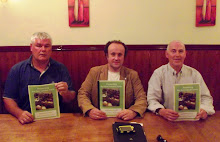
Cllr. Anthony Kelly with local SF members and concerned locals in Baldwinstown recently
 Speaking yesterday, Cllr. Kelly said, "The county council were suitably satisfied that the vast majority of locals want these new street lights, and an extension to the footpath, so as to connect the village to the nearby credit union. This is a matter of public safety. Due to funding shortfalls, work will not commence until early next year, but the council engineer has assured me that this job will go ahead."
Cllr. Kelly went on to commend the people of the local area for not giving up when representatives of other political parties told them that the job could not be done.
"Never give up", Cllr. Kelly said, "There's no job that cannot be done, if we stand together, even in a recession."

Friday, October 22, 2010

The little white lies of a little corrupt government

As this blog glances through the news columns this morning, its clear that there is a growing acceptance among economists and rational people that the governments four year plan of budget cuts and misery will not be successful in clearing the cutting our deficit to 3%. Instead, in the opinion of leading economists, the governments inflexible stance on the four year plan and their rejection of all other options will lead to further economic collapse, and a possible cataclysm that some people have stated will result in a "lost decade". The ERSI have claimed that 10,000 more people will join the dole queues next year, and 60,000 more people will be forced to emigrate, as there will be NO improvement in the next four years as a direct result of the Fianna Fail/Green coalitions exceedingly austere plan.

Brian Cowen has responded to the condemnation of the governments plan by saying that all other options are "not feasible", and that attempting anything else would "would raise the actual national debt, over €20bn would have to be found."
Can we believe this?
Here are some of the other economic "facts" that this government has presented us with in the past.


"There is an exposure in the Irish banks, but they made it clear they can accommodate it........ Irish banks can weather this crisis."   - Brian Lenihan, October 2008

"Construction is hugely strong at present and looks as if it will be for the medium term. I'm always sceptical of the glasses half-empty."     Bertie Ahern, April 2006

"The consensus scenario for the housing market is a soft landing"   - Mary Harney, August 2006

"The Government is confident about the strength and resilience of the Irish financial system."   - Brian Lenihan, September 2008.

"The opposition parties .... unfounded claims have been picked up abroad...... Loose talk costs jobs!"   - Brian Cowen, June 2009

"In terms of monetary and banking stability, we are in a very good position."   - Brian Lenihan, June 2008

 "We need a strong and effective Europe to help us remain competitive....... to help us protect, retain and create jobs"   - Brian Cowen lying to the Irish people to win a Yes vote to Lisbon, September 2009.

As you can see, this blog finds it very hard to believe anything that the current government says. And lets not forget the honest, idealistic green party....
"The Green party are committed to real change and to achieve this, Fianna Fail and the Progressive Democrats must be removed from government."   - John Gormley, May 2007

Stuck to your guns there John, didn't you?

Now we can all see who was lying about the Lisbon Treaty

What this nation does not need now is the lying, incompetent actions of the Fianna Fail/Green coalition. What we need is change. What we need is a general election, and the election of a party that will fix our economy, not by punishing the weak, but by getting the country back to work. Sinn Féin is the only party in Ireland who have put forward an alternative budget that matches what the economists are now calling for.
The time for real change has come.

Tuesday, October 19, 2010

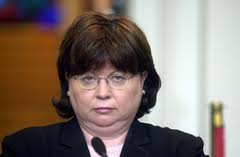
Theres something about Mary Harney

Yesterday, this blog listen with eager curiosity as "Health Minister" Mary Harney defended the HSE's plans for the future of Wexford General Hospital. Of course, Mrs Harney didn't actually give us any explicit details as to her plans for the hospital, because she has to discuss it with other people first. Why she didn't do that before addressing the people of Wexford is beyond us, but perhaps she needed that smokescreen to try and sell the people of Wexford a plan that will see their health service decimated in the next four years.
Who is Mary Harney?

Yes, we know she is the minister for wealth, not the minister for health, but who is she? Where has she come from, and what factors have led to the development of a minister for health who doesn't give a damn about the welfare of the nations sick and vulnerable?
Mary Harney was born in Galway in 1953, but her parents moved to Dublin shortly after her birth. In 1976 she graduated from Trinity College in Dublin with a bachelor of arts in modern studies. For a brief time she served as a secondary school teacher.
In 1977, Harney stood unsuccessfully as a Fianna Fail candidate in the general election of that year. Jack Lynch, seeing something worthwhile in Harney, appointed her to the Seanad. She was elected to Dublin County Council in 1979, and two years later won election to the Dail. Unfortunately for the sick of Ireland, Harney has been re-elected every election since.
In 1985, Harney was expelled from Fianna Fail by Charles Haughey for being part of the Gang of 22, who voted in favour of the Anglo Irish Agreement. Later that year she became a founder member of the Progressive Democrats, who declared themselves as a clear alternative to Fianna Fail. However, less than four years later, Harney ended up back in government with Fianna Fail, and her destiny was to remain intertwined with them for the coming two decades.
Following the 1997 general election, Harney, now leader of the PDs, became the first female Tánaiste, and minister for enterprise, trade and employment. In 2001, Harney was at the centre of a scandal when it emerged that she and her husband had used an Air Corp craft to fly to Sligo, where she opened an off license owned by a friend.
On the 29th of September 2004, Harney was appointed Minister of Health in a government reshuffle. The same year Harney personally requested the use of the Government jet for a FAS trip to Florida at a cost of up to €80,000 to taxpayers. She travelled to Florida with senior FÁS executives, department officials, and her husband, Brian Geoghegan, was receiving more than €100-a-day subsistence money from the taxpayer when FÁS picked up her hairdressing bill in a Florida hotel. Like all government ministers travelling abroad, she was entitled to a daily allowance for "incidental expenses".

In the 2007 General Election, the PDs were essentially wiped out. Alas Mary Harney was not, and remained as Minister for Health. Currently Mary Harney is the longest serving female member of Leinster House. She is also the most publicly hated member of the house.
We have seen that Mary Harney is a ruthless self serving TD, who has been at the centre of more than one scandal. Can we trust someone like her to protect our health service? Can we trust her to protect the rights of our health workers? Can we trust her to look after our sick?
No, we cant.
Remember this when the next election comes around. A vote for Fiann Fail is a vote for Mary Harney to continue as Minister for Health.

Sunday, October 17, 2010

Easter 1916 - WB Yeats

I have met them at close of day
Coming with vivid faces
From counter or desk among grey
Eighteenth-century houses.
I have passed with a nod of the head
Or polite meaningless words,
Or have lingered awhile and said
Polite meaningless words,
And thought before I had done
Of a mocking tale or a gibe
To please a companion
Around the fire at the club,
Being certain that they and I
But lived where motley is worn:
All changed, changed utterly:
A terrible beauty is born.


That woman's days were spent
In ignorant good will,
Her nights in argument
Until her voice grew shrill.
What voice more sweet than hers
When young and beautiful,
She rode to harriers?
This man had kept a school
And rode our winged horse.
This other his helper and friend
Was coming into his force;
He might have won fame in the end,
So sensitive his nature seemed,
So daring and sweet his thought.
This other man I had dreamed
A drunken, vain-glorious lout.
He had done most bitter wrong
To some who are near my heart,
Yet I number him in the song;
He, too, has resigned his part
In the casual comedy;
He, too, has been changed in his turn,
Transformed utterly:
A terrible beauty is born.


Hearts with one purpose alone
Through summer and winter, seem
Enchanted to a stone
To trouble the living stream.
The horse that comes from the road,
The rider, the birds that range
From cloud to tumbling cloud,
Minute by minute change.
A shadow of cloud on the stream
Changes minute by minute;
A horse-hoof slides on the brim;
And a horse plashes within it
Where long-legged moor-hens dive
And hens to moor-cocks call.
Minute by minute they live:
The stone's in the midst of all.


Too long a sacrifice
Can make a stone of the heart.
O when may it suffice?
That is heaven's part, our part
To murmur name upon name,
As a mother names her child
When sleep at last has come
On limbs that had run wild.
What is it but nightfall?
No, no, not night but death.
Was it needless death after all?
For England may keep faith
For all that is done and said.
We know their dream; enough
To know they dreamed and are dead.
And what if excess of love
Bewildered them till they died?
I write it out in a verse --
MacDonagh and MacBride
And Connolly and Pearse
Now and in time to be,
Wherever green is worn,
Are changed, changed utterly:
A terrible beauty is born.

Remember the 1980 Hunger Strike

The 1981 Hunger Strike and the terrible sacrifice made by ten noble republican hunger strikers has etched itself into the collective memory of Irish Republicans and those who strive for freedom everywhere. However, due to its profile perhaps, some have regrettably failed to remember the gallant protest made other republican hunger strikers only a few months earlier, in late 1980.
In late October 1980, seven prisoners in the H/Blocks, led by Brendan Hughes, who was succeeded as O/C by Bobby Sands, began a hunger-strike for political status. Hughes was joined on the on the fast by five other IRA Volunteers; Tom McFeeley; Sean McKenna, Leo Green, Tommy McKearney and Raymond McCartney and an INLA Volunteer, John Nixon.

In early December, as the hunger strike entered its sixth week, they were joined on the fast by three women in Armagh jail who had, along with their comrades, been on the no-wash protest since the previous February; Mairead Farrell, OC of the prisoners, Mairead Nugent and Mary Doyle.
The British Government refused to listen to the mass protests that broke out across Ireland and England during late 1980, and rejected any notion of giving the prisoners back political status. In mid-December, as Sean McKenna neared death and as the prisoners prepared to escalate the hunger-strike, the British announced that they were prepared to concede the Prisoners' demands, on a phased basis, once the fast had ended.
Trusting that Humphrey Atkins, the then British Secretary of State, would not renege on this promise, Sands, having consulted his staff, the prisoners and those on the fast, reluctantly decided to end the hunger strike on Thursday, 18 December. After weeks of delays by the British in implementing the promised changes, and confusion among the prisoners and their supporters, it became apparent in January 1981 that political status was not to be granted. The prisoners, faced with no alternative, would be forced to embark on a new fast that would have widespread repercussions in Ireland and abroad.

Saturday, October 16, 2010

We only want the Earth - James Connolly (1907)

Some men, faint-hearted, ever seek
Our programme to retouch,
And will insist, whene’er they speak
That we demand too much.
’Tis passing strange, yet I declare
Such statements give me mirth,
For our demands most moderate are,
We only want the earth.

“Be moderate,” the trimmers cry,
Who dread the tyrants’ thunder.
“You ask too much and people By
From you aghast in wonder.”
’Tis passing strange, for I declare
Such statements give me mirth,
For our demands most moderate are,
We only want the earth.

Our masters all a godly crew,
Whose hearts throb for the poor,
Their sympathies assure us, too,
If our demands were fewer.
Most generous souls! But please observe,
What they enjoy from birth
Is all we ever had the nerve
To ask, that is, the earth.

The “labour fakir” full of guile,
Base doctrine ever preaches,
And whilst he bleeds the rank and file
Tame moderation teaches.
Yet, in despite, we’ll see the day
When, with sword in its girth,
Labour shall march in war array
To realize its own, the earth.

For labour long, with sighs and tears,
To its oppressors knelt.
But never yet, to aught save fears,
Did the heart of tyrant melt.
We need not kneel, our cause no dearth
Of loyal soldiers’ needs
And our victorious rallying cry
Shall be we want the earth!

- Songs of Freedom

Making a complaint about a newspaper: Know Your Rights

According to our constitution, Ireland has a free press. This means that the Government should not censor or control the articles or stories the press choose to print. Regrettably, this is not always the practice in our country. There are professional standards and behaviors that the print media must comply with. These professional standards and behaviors are set out in a Code of Practice for Newspapers and Periodicals and enforced by the Office of the Press Ombudsman and the Press Council of Ireland. It is up to you to contact the Press Ombudsman if you have been directly and personally affected by a breach of the Code of Practice.

Code of Practice can be found here;
http://www.pressombudsman.ie/v2/pressombudsman/portal.php?content=_includes/codeofpractice.php
You can make a complaint to the Press Ombudsman about any article you read in any Irish newspaper (including Irish editions of UK newspapers) or Irish magazine that you feel breaches the code. This applies to national, provincial and regional newspapers. You can also make a complaint about the behaviour of a journalist which you feel breaches the code.

The Press Ombudsman can only deal with complaints about articles that are published or behaviour that occurs after 1 January 2008 and where you lodge your complaint within 3 months of the publication or incident.

To make a complaint, the article or behaviour must be in breach of the professional standards and behaviours set out in the Code of Practice for Newspapers and Periodicals. In addition, you must be directly affected by and involved in the article or behavior in question. The Press Ombudsman will not deal with the complaint if legal proceedings have been initiated

You must first make your complaint to the editor of the newspaper or magazine in question, explaining why you think the code has been breached. If you do not get a response within a reasonable amount of time (about 2 weeks) or if you are not happy with the response, you can make a complaint to the Press Ombudsman.
 
You must lodge your complaint with the Press Ombudsman within 3 months of the date of publication of the article or occurrence of the incident.
Your complaint should include;
Your contact details.

A summary of your complaint, indicating which part(s) of the Code of Practice you feel has been breached and why.
A dated cutting of the article if the complaint is about an article. If you are making your complaint by email or on-line, you must send a hard copy of the article within 7 days or as an attachment (or link) to the email.
Copies of any correspondence between you and the editor of the newspaper or magazine.


Office of the Press Ombudsman
1, 2 & 3 Westmoreland Street
Dublin 2
IRELAND
Locall:1890 208 080
Fax:(01) 674 0046
Homepage:www.pressombudsman.ie
Email:info@pressombudsman.ie


Friday, October 15, 2010

We Will Rise Again - James Connolly (1916)

The celebrations of the past week in Ireland are a welcome reminder of the indestructible nature of the spirit of freedom. Who would have thought in August, 1914, that in March, 1916, the principle of a distinct and separate existence for Irish Nationality would evoke such splendid manifestations of popular support and popular approval. In August, 1914, it seemed to many of the most hopeful of us that Ireland had at length taken its final plunge into the abyss of Imperialism, and bade a long farewell to all hopes of a separate unfettered existence as a nation.


Plans carefully laid for years before had been suddenly and relentlessly put in operation. A party of Parliamentary representatives elected to obtain Home Rule from England, and without any mandate expressing hostility to any other people, suddenly claimed the power and right to pledge the manhood of Ireland to battle with a friendly nation – a nation whose last public act towards Ireland had been an attempt to open the port of Queenstown when shut by English intrigue. The same Parliamentary Party publicly renounced all hope and desire that this country should ever attain the status of nationhood, and expressly limited the ambitions of Ireland to such freedoms as the British Government would judge to be not incompatible with the British Empire. Having so limited the claims and renounced the hopes of Ireland this Parliamentary Party consummated its treason by calling upon their fellow countrymen to go out to die, in order to win for Belgium those national rights and powers they had just renounced the right to claim for Ireland.

The public press, the vaunted guardians of public liberty, sold themselves in a body to the Government that had publicly pledged itself not to interfere with an Orange-cum-militarist conspiracy against the liberties of Ireland, and immediately became the foulest slanderers and vilifiers of all who stood by the national cause they had deserted.

The few papers that refused to be bullied, or to be bought, were ruthlessly suppressed by military force.

All over Ireland the public representatives whom a lifetime of political intrigue, vote-hunting and job-hunting had debased and demoralised, yielded at the first onset of the new Irish Imperialism, and joyfully, eagerly, exultantly sold their country and their country’s cause.

August, 1914, and the months immediately succeeding it, were months of darkness and of national tribulation. If the darkest hour is that before the dawn, then the dawn should not be far off, for surely no darker hour could come for Ireland than that we passed through in the beginning of this English war upon Germany.

But slowly, gradually, but persistently, the forces standing for the social and national freedom of Ireland won the people back to greater sanity and clearer visions. Despite imprisonment, despite persecution, despite suppression of newspapers, despite avalanches of carefully framed lies, the truth made headway throughout the country. The people saw clearer and clearer that nothing had been changed in Ireland, that Ireland was still denied every prerogative that makes for true nationhood, that her interests were still subject to the interests of a rival country, that the Home Rule Act expressly declared for the subjection of Ireland as a permanent condition, that the Redmond-Devlin party had sold the birthright of their country in return for the valueless promise of a Government that did not even keep faith with its own countrymen or women, that the British Empire and the freedom or prosperity of the Irish people were two things that could not exist together in Ireland, and that therefore one or the other must forever and utterly perish.

All through Ireland last week the manhood and womanhood of the nation have gladly, enthusiastically proclaimed their realisation of those truths. This 17th of March will be forever memorable for that reason. The magnificent parades of Volunteers under arms, the overflowing meetings, the joyous abandon of the Irish gatherings of all descriptions, and above all the exultant rebel note everywhere manifest, all, all were signs that the cause of freedom is again in the ascendant in Ireland.

The Cause is not lost, this 17th of March has assured us that despite all the treasons of all the traitors Ireland still remains as pure in heart as ever, and though Empires fall and tyrannies perish

We Will Rise Again.